The Reef Gets a Guardian: How AI Is Helping Protect the Great Barrier Reef
Australian scientists and global technology partners are deploying AI to monitor the Great Barrier Reef at a scale no human team could match — analysing millions of survey images, tracking crown-of-thorns starfish outbreaks, and giving reef managers faster, sharper intelligence than ever before.
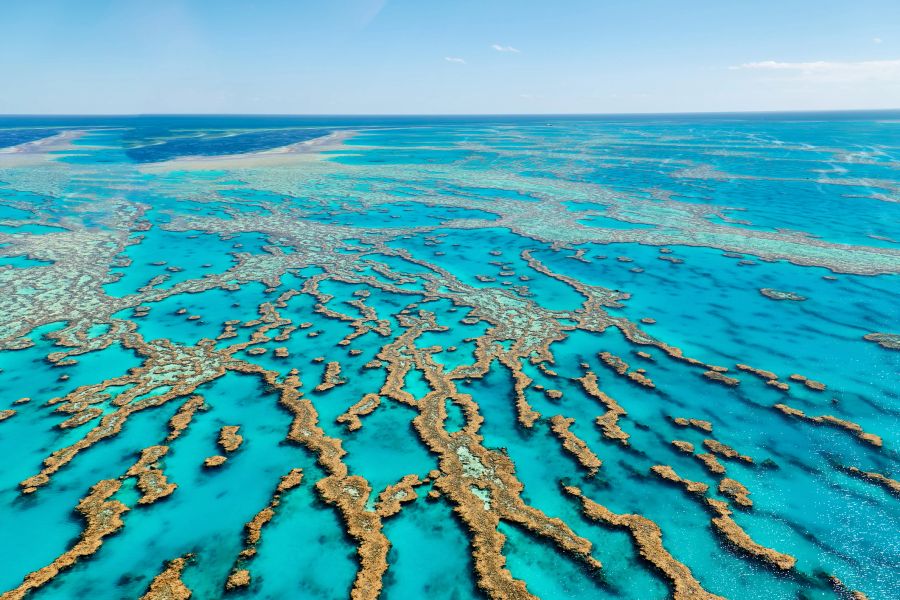
The Great Barrier Reef stretches across more than 344,000 square kilometres of the Coral Sea — an area larger than the United Kingdom. For decades, monitoring its health meant sending teams of trained divers to photograph and count what they could see, then spending months processing the results by hand. The scale of the task has always outpaced the resources available to do it.
AI is beginning to change that equation. Across a range of programmes run by Australian institutions and their international partners, machine learning tools are now doing in hours what once took months — and in some cases doing things that were simply not possible before.
The Image Analysis Problem
The Australian Institute of Marine Science (AIMS) has been conducting long-term monitoring surveys of the Great Barrier Reef since the 1980s. Over that time, researchers have accumulated millions of underwater survey photographs — a visual archive of reef health that is, in principle, one of the most valuable datasets in marine science.
The problem has always been processing it. Identifying and counting coral species, algae, and other organisms in underwater photographs requires trained human analysts, and the volume of images generated by modern survey programmes far exceeds what any team of analysts can work through in a reasonable timeframe.
AIMS has been developing and deploying AI-powered image analysis tools to address this bottleneck. Using machine learning models trained on expert-labelled reef images, these tools can classify the organisms visible in survey photographs automatically — identifying coral species, measuring cover, and flagging changes over time. What previously required months of manual analysis can now be processed in a fraction of the time.
The practical consequence is that reef managers receive monitoring results faster, and the backlog of unprocessed survey data can be worked through systematically. AIMS has described this capability as transformative for the pace at which monitoring intelligence can be turned into management action.
CoralNet and ReefCloud: Two Platforms, One Goal
Two complementary platforms have become important tools for processing the vast volumes of underwater survey imagery generated by reef monitoring programmes around the world.
CoralNet is an online annotation and analysis platform developed at the University of California, San Diego, and the Scripps Institution of Oceanography. It allows researchers to label benthic survey images — photographs of the seafloor and reef structure — and train machine learning classifiers on those labelled datasets, which can then be applied automatically to new images. The platform has been adopted by reef monitoring programmes globally, and the ability to share trained classifiers across institutions means that the labelling work done by one research team can benefit others — a meaningful efficiency gain for a scientific community working with limited resources.
ReefCloud is a separate platform developed by AIMS specifically to support coral reef monitoring at scale. It brings together survey data from monitoring programmes across the Indo-Pacific, applies AI-assisted image analysis to classify what is visible in survey photographs, and makes the results available through a publicly accessible dashboard. By centralising data from multiple programmes and automating much of the analysis, ReefCloud is designed to give reef managers and researchers a faster, broader picture of reef condition than any single monitoring programme could provide on its own.
Tracking Crown-of-Thorns Starfish
One of the most persistent threats to the Great Barrier Reef is the crown-of-thorns starfish — a coral predator that, during population outbreaks, can cause significant damage to reef structure. Managing outbreaks requires early detection and rapid response, which in turn requires surveillance across a vast and remote area.
The Great Barrier Reef Marine Park Authority (GBRMPA) and its partners have been working to improve outbreak detection and response using a combination of citizen science reporting, survey data, and increasingly, AI-assisted analysis. Underwater survey imagery and data from monitoring programmes are being used to train models that can identify crown-of-thorns starfish in images and flag areas of elevated density for follow-up.
The goal is to give the teams responsible for outbreak control — who inject individual starfish with bile salts or ox bile to kill them — better information about where to deploy their efforts. Earlier detection and more precise targeting means more effective use of limited response resources.
Google and the Allen Coral Atlas
At a global scale, one of the most significant AI-powered reef monitoring tools is the Allen Coral Atlas — a project developed through a partnership that includes Planet Labs, the University of Queensland, Arizona State University, and the National Geographic Society, with support from Google.
The Atlas uses satellite imagery and machine learning to map shallow coral reefs around the world at a resolution and frequency that was not previously achievable. It covers the world's coral reefs — including the Great Barrier Reef — and is updated regularly, providing a near-real-time picture of reef extent and condition that reef managers and researchers can access freely online.
The University of Queensland's involvement in the Atlas means Australian expertise is embedded in one of the most widely used reef monitoring tools in the world. The Atlas has been used by governments, conservation organisations, and researchers to track bleaching events, identify areas of reef loss, and prioritise conservation effort.
The Great Barrier Reef Foundation's Reef Restoration and Adaptation Programme
The Great Barrier Reef Foundation — a not-for-profit organisation that funds and coordinates reef science and conservation — has been running a large-scale Reef Restoration and Adaptation Programme (RRAP) in partnership with AIMS, CSIRO, the Australian Institute of Marine Science, and other institutions.
Within this programme, AI and data science tools are being applied to a range of challenges: modelling how different interventions might affect reef recovery, analysing the genetic diversity of coral populations to identify heat-tolerant strains, and processing the large volumes of environmental data generated by reef monitoring systems.
The RRAP is one of the largest reef restoration research programmes in the world, and its use of AI reflects a broader shift in how large-scale conservation science is being conducted — with data processing and modelling capabilities that would have been impractical a decade ago now becoming routine.
CSIRO's Contribution
CSIRO — Australia's national science agency — has been involved in reef monitoring and modelling work that draws on AI and machine learning capabilities. CSIRO's research into water quality, sediment transport, and the cumulative effects of land-based runoff on reef health uses modelling tools that incorporate machine learning components to process and interpret large environmental datasets.
CSIRO has also contributed to the development of predictive models for coral bleaching — tools that use sea surface temperature data and other environmental variables to forecast where bleaching conditions are likely to develop. These models give reef managers advance warning that allows them to prepare monitoring and response resources before a bleaching event occurs.
What This Means for the Reef
It would be inaccurate to suggest that AI is solving the challenges facing the Great Barrier Reef. The pressures on the reef — rising sea temperatures, water quality, and the cumulative effects of climate change — are not problems that any monitoring or data analysis tool can resolve on its own. The reef's long-term health depends on broader action on the drivers of those pressures.
What AI is doing is making the scientific and management response to those pressures more capable. Faster monitoring results mean faster management decisions. Better outbreak detection means more effective use of response resources. More comprehensive mapping means a clearer picture of where the reef is under the most stress and where conservation effort will have the greatest impact.
For the scientists and managers who have spent careers working to protect the reef with limited tools and limited budgets, the arrival of AI capabilities that can process millions of images, map thousands of kilometres of reef, and model complex ecological dynamics represents a genuine and meaningful shift. The reef now has a guardian that never sleeps — and that is watching more carefully than has ever been possible before.
Stay informed
Get AI news every Friday
The AI Digest delivers the week's most important AI stories — free, in plain English.
Subscribe free →Related Articles
More AI in Australia →
CSIRO's AI Research Is Putting Australia on the Global Science Map
CSIRO is applying AI to bushfire prediction, reef monitoring, and precision agriculture — and the world is paying attention. Inside Australia's top AI research.

Australia's Aged Care Crisis Meets AI: How Smart Sensors and Robots Could Transform Elderly Care
Australia's aged care sector is under serious strain. The workforce gap is large and growing. But a quiet wave of AI-powered technology — from fall-detection sensors to social companion robots — is beginning to reshape what care looks like. Here's what's actually happening, and what the evidence says.

The AI Scam Epidemic: How Australians Are Losing Billions — and Why AI Is Now Fighting Back
Australians lose billions of dollars to scams every year, and AI-powered tools — voice cloning, deepfakes, and hyper-personalised phishing — are making the problem worse. But the same technology is now being turned against the scammers.